
Ingo Swann (Remote Viewer): Difference between revisions
No edit summary |
No edit summary |
||
| Line 21: | Line 21: | ||
| case_file = | | case_file = | ||
}} | }} | ||
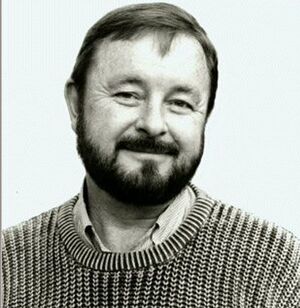
Ingoswann1970.jpg | |||
| Line 32: | Line 33: | ||
Ingo Douglass Swann (September 14, 1933 – January 31, 2013) was an American psychic, artist, and author, whose claims of clairvoyance were investigated as a part of the [[Central Intelligence Agency]]’s [[Project Stargate|Stargate Project]]. Swann is credited as the creator of the term “Remote Viewing," a term which refers to the use of extrasensory perception to perceive distant persons, places, or events. | Ingo Douglass Swann (September 14, 1933 – January 31, 2013) was an American psychic, artist, and author, whose claims of clairvoyance were investigated as a part of the [[Central Intelligence Agency]]’s [[Project Stargate|Stargate Project]]. Swann is credited as the creator of the term “Remote Viewing," a term which refers to the use of extrasensory perception to perceive distant persons, places, or events. | ||
Ingo Douglas Swann (September 14, 1933 – January 31, 2013) was an American psychic, artist, writer, and former-Scientologist known for being the co-creator, along with [[Russell Targ]] and [[Hal Puthoff (Doctor)|Harold E. Puthoff]], of remote viewing, and specifically the [[Stargate Project]]. | |||
INGO SWANN – 14 SEPT 1933 – 1St FEBRUARY, 2013. | |||
A visionary, Psychic, artist, & author, and also the father of modern Remote Viewing, Ingo Swann was an SRI sub contracted intuitive from 1971 – 1988 and creator of CRV or Coordinate Remote viewing now known as Controlled Remote Viewing. | |||
“For many of us Ingo Swann has long been known as the father of remote viewing and was a great inspiration. Ingo participated in the development of the remote viewing protocols and conducted the first ever Remote Viewing experiment in 1971. | |||
The years 1972 to 1988 were spent creating (CRV) Controlled remote Viewing) the SRI methodology which was delivered to the D.I.A and U.S. military as a Remote Viewing training methodology, and which is now at the core of all modern forms of Remote Viewing. | |||
I had the honour of visiting Ingo at his new york home as well as an ongoing dialogue over the last few years over CRV and remote viewing in general. He was a big fan of eight martinis magazine and during this time Ingo was kind enough to share his C.V with me so its best that I hand over at this stage and allow Ingo to present his own bio in his own words from his C.V. (below). | |||
All the best…” | |||
Daz Smith (3rd Feb, 2013) | |||
==AN INTRODUCTION TO INGO SWANN== | |||
Born in the Colorado Rockies, 14 September 1933, Ingo Swann earned in 1955 a B.A. degree in biology after which, in Korea, he served on the staff of the Commander of the Pacific Forces, Gen. I.D. White. In 1958, he accepted a position at the United Nations where he worked in varying capacities until 1969. | |||
In 1970, he entered full-time parapsychological and psychoenergetics research, becoming an acknowledged, innovative researcher in these frontier sciences. Ingo Swann is also an artist of some renown, his works having been collected by the Smithsonian’s National Air and Space Museum, His extensive work figures prominently in most books dealing with contemporary psychic research matters and recently has been featured in three volumes of the best-selling Time-Life Books series, Mysteries of the Unknown | |||
Science felt a small ripple when, in 1973, parapsychologist Dr. Gertrude Schmeidler reported the extraordinary success, the first of its kind, of a mind-over-matter experiment. Ingo Swann, using only his mind, repeatedly had been able to cause controlled temperature changes in a sealed, distant vacuum. It could now be seen that the human mind was capable of extending its powers beyond the confines of the brain, Time (4/23/731 wondered if Swann’s powers were more dangerous than the atomic bomb. | |||
The Smithsonian speculated on the source of Swann’s talents when it reported that, at Stanford University, he had “apparently altered the performance of a deeply buried, heavily shielded magnetometer for 30-second periods through use of PK, and by then ‘looking into ‘the device and describing its mechanisms.” Horizon (winter/74), Time (3/4/74) and Newsweek (3/4/74) surmised that Swann’s lab confirmed PK and clairvoyant powers required a rethinking concerning the importance of psychic giftedness. | |||
After 1974, Ingo Swann’s participation in research became more vigorous. He became an intensively-studied guinea pig at the famous think-tank, Stanford Research Institute, and worked with dozens of other researchers in the u.s. and Europe, John wilhelm, in his 1976 book, The Search for Superman, indicated that “lngo Swann flies straight out of Star Maker ••• His results are remarkable.” | |||
In Germany, Esotera (12/12/76) termed Swann the foremost super psychic of PSI research in American. The Reader’s Digest (9/77) reported that recent research confirmed that Swann, in remote-viewing experiments, could “go” to any spot in the globe and sketch correctly roads and buildings just as they are at that point. | |||
McCalls (1/77) wondered if Swann’s abilities could be used for psychic spying, as did The San Francisco Examiner (2/10/77), The Washington Post (9/7/77) and columnist Jack Anderson writing about the ESP Gap between the u.s. and the U.S.S.R. New Times (3/3/78) speculated that Swann had become a psychic superweapon. In November 1978, Swann was the featured banquet speaker at the annual meeting of the u.s. Army Materiel Systems Analysis Activity. After 1978, although extensive publicity continued, Swann’s ongoing work became shrouded in a cloak of secrecy. | |||
In 1987, Swann published Natural ESP: A Layman’s Guide to Unlocking the Extra-Sensory Powers of the Mind, a Bantam New Age Book. His prior books are: To Kiss Earth Good-bye (Hawthorn, 1974); Cosmic Art (Hawthorn, 1975); Star Fire (Dell, 1978). | |||
He has published articles on psychic abilities, visionary art, and consciousness research. In 1988, he completed a tour of lectures in Germany and Canada, with essays appearing in Italy, France and Germany. | |||
==Early life== | ==Early life== | ||
| Line 45: | Line 81: | ||
[[Russell Targ]] and [[Hal Puthoff (Doctor)|Harold Puthoff]], two experimenters, tested Geller and Swann and concluded that they had unique skills.[4] Others have strongly disputed the scientific validity of [[Russell Targ]] and [[Hal Puthoff (Doctor)|Harold Puthoff]]'s experiments.[14] In a 1983 interview, magician Milbourne Christopher remarked that Swann was "one of the cleverest in the field". | [[Russell Targ]] and [[Hal Puthoff (Doctor)|Harold Puthoff]], two experimenters, tested Geller and Swann and concluded that they had unique skills.[4] Others have strongly disputed the scientific validity of [[Russell Targ]] and [[Hal Puthoff (Doctor)|Harold Puthoff]]'s experiments.[14] In a 1983 interview, magician Milbourne Christopher remarked that Swann was "one of the cleverest in the field". | ||
==THE RESEARCH WORK OF INGO SWANN – A 32-YEAR OVERVIEW.== | |||
Since 1970, Ingo Swann has worked with over 38 cutting-edge researchers in the fields of parapsychology and cognitive perception, with an additional 14 projects governed by non-disclosure agreements. | |||
His early 1970-1972 work with parapsychology researchers based in New York produced results that attracted international attention and acclaim. By 1973, with thousands of experimental trials counted up, he was broadly noted as parapsychology’s most tested “guinea-pig.” | |||
However, he is best known for his long-term association with Dr. H. E. Puthoff at Stanford Research Institute (SRI). This work (between 1972 and 1988 in the field of remote viewing) achieved high luminosity because of sponsorship by U.S. intelligence and military Through these years, hundreds of thousands of experimental trials contributed to increases of knowledge that had not been attained elsewhere. | |||
After his retirement in 1989 from such big-time research, Ingo Swann continued intermittent work with advanced researchers in the fields of multidimensional mental imagery, perception, and refined brainwave studies. | |||
Ingo Swann’s 32-years of work is unified by four principal factors. | |||
His original and continuing focus was not on parapsychology models alone, but included the larger fields of extraordinary awareness and perception faculties. He understands these faculties to be naturally existing and always available within the human and which, at the species biomind level, transcend cultural and societal boundaries. | |||
He has always been an advocate of a much-needed multidisciplinary approach to problems of human awareness thresholds and the delicate mental expertise that can be discovered about them. | |||
He has basically viewed the phenomena of clairvoyance, telepathy, psychokinesis and remote viewing from the overall and bigger humankind level, rather than from the smaller personal, individual, or soci-specializing levels. | |||
since faculties for expanded awareness and perception exist as a full part of the human biomind at the species level, he has always considered it necessary to research, discover, and remedy social and cultural factors that prevent their nurturing and development. | |||
All of these factors were incorporated into the fifteen year research project at Stanford Research Institute, and helped produce development of various important but hitherto unknown aspects of remote viewing. The project also researched and leaned heavily on hundreds of published papers and information drawn from scientific sources outside the boundaries of parapsychology focus. | |||
In a socio-cultural sense, Ingo Swann’s overall 30-odd years of work roughly covers two periods of mainstream intolerance-tolerance ratios. Always and only working with accredited scientists, his work between 1970-1985 took place within a long established milleu of extreme scientific and mainstream intolerance to human faculties of expanded and refined perception. | |||
Since 1985, this intolerance has ameliorated considerably, largely due to advancing discoveries about the impressive extent of biological receptors of the human body-mind, many of which account for extraordinary human sensing faculties. | |||
Continuing discovery confirming the remarkable nature of the human genome has also clearly established that the genetic basis for those faculties is present in most individuals, although remaining socially non-nurtured and undeveloped. As of 2000, however, extreme intolerance against scientific development of telepathy remains abundantly active. | |||
==Out-of-body experiment== | ==Out-of-body experiment== | ||
| Line 107: | Line 169: | ||
In his 1998 autobiography Penetration: The Question of Extraterrestrial and Human Telepathy, Swann described his work with individuals in an unknown agency who study extraterrestrials (E.T.), his remote viewing of a secret E.T. base on the hidden side of the Moon and his "shocking" experience with a sexy scantily dressed female E.T. in a Los Angeles supermarket. He concludes that extraterrestrials are living on Earth in humanoid bodies. Swann deduces that there are many extraterrestrials, that many are "bio-androids", and that they are aware their only foes on Earth are psychics. Later, Swann and an individual known as "Mr. Axelrod" took a flight to an unknown northerly destination, deduced by Swann as possibly Alaska. Along with two "twin" bodyguards, Swann and Axelrod attempt to secretly watch a recurrent UFO appear and suck up the water of a lake. Mr. Axelrod discloses that the silent, growing, oscillating triangle is simultaneously scanning the area and eliminating any animals in the area[54] and that the silent "beams" emanating from the object were "blasting deer or porcupines from the woods or something." The "twin" bodyguards come to the attention that they've been discovered, and the group is "attacked" by the UFO. Swann was thrown to safety by his colleagues and sustained a minor injury. | In his 1998 autobiography Penetration: The Question of Extraterrestrial and Human Telepathy, Swann described his work with individuals in an unknown agency who study extraterrestrials (E.T.), his remote viewing of a secret E.T. base on the hidden side of the Moon and his "shocking" experience with a sexy scantily dressed female E.T. in a Los Angeles supermarket. He concludes that extraterrestrials are living on Earth in humanoid bodies. Swann deduces that there are many extraterrestrials, that many are "bio-androids", and that they are aware their only foes on Earth are psychics. Later, Swann and an individual known as "Mr. Axelrod" took a flight to an unknown northerly destination, deduced by Swann as possibly Alaska. Along with two "twin" bodyguards, Swann and Axelrod attempt to secretly watch a recurrent UFO appear and suck up the water of a lake. Mr. Axelrod discloses that the silent, growing, oscillating triangle is simultaneously scanning the area and eliminating any animals in the area[54] and that the silent "beams" emanating from the object were "blasting deer or porcupines from the woods or something." The "twin" bodyguards come to the attention that they've been discovered, and the group is "attacked" by the UFO. Swann was thrown to safety by his colleagues and sustained a minor injury. | ||
==A PARTIAL LISTING OF INGO SWANN RESEARCH AND EXPERIMENTS:== | |||
1971: Began active participation in parapsychological laboratory work. | |||
1971: Research with Clive Backster, New York (plant consciousness and psychokinetic effects of small samples of graphite). | |||
1971: Research with Dr. Gertrude Schmeidler, City College of New York (psychokinetic effects upon continuously recorded temperature) . | |||
1971-1972: Research with Dr. Karlis Osis, The American Society for psychical Research, New York (out-of-body consciousness and perceptions). | |||
1972: Research with Dr. C. Silfen, The American Society for Psychical Research, New York (temporal and spatial perception of remote viewing potentials). | |||
1972: Research with Dr. H. E. Puthoff, Stanford Research Institute (psychokinetic perturbation of a superconductor-shielded Josephson effect magnetometer). | |||
1973: Research with Dr. H. Crane, Dr. H. E. Puthoff, and R. Targ, Stanford Research Institute (project Scanate (CIA-funded): systematic utilization of non-physical targets that “refer” to real-time situations. | |||
1973: Research with Dr. H. E. Puthoff, R. Targ and H. Sherman, Stanford Research Institute (experimental psychic probe of the planet Jupiter in attempting to identify distance measurement of consciousness). | |||
1973: Research with Dr. W. Harman, Stanford Research Institute (experimental prophetic correlations, an experimental efforct at world-wide predictive trend analysis correlated with adept/inept dimension alternative future histories). | |||
1974 – 1988: With Dr. H. E. Puthoff, Stanford Research Institute, continuous in depth reaearch funded by government clients (CIA, DIA, DOD, Army Intelligence). The operative nature and directions of this long-term research activity were classified in 1975 by the participating sponsors, and remain classified of the year 2001. | |||
1974: Research with A. Twitchell, Dr. J. Mitchell, Dr. J. Wingate, and Dr. G. Schmeidler, Society for Psychical Research (precognition, an attempt to ascertain consciousness variables in. predictive ability) | |||
1974: Research with Dr. G. Schmeidler, Dr. S. Krippner, and Dr. ,J. Mitchell, New York (an experimental remote viewing probe of a distant planet Mercury). | |||
1975: Research with Dr. R. Miller, Atlanta, Georgia (psychokinetic effects in a diffusion cloud chamber). | |||
1975: Research with Dr M. Vogel, San Jose, California (psychokinetic effects on electrical reactions of a plant). | |||
1975: Research with Dr. E. May and C. Honorton, Maimonide Medical Center, New York (a dynamic PK experiment with Ingo Swann). | |||
1975: Research with Dr. J. Vallee, Dr. A. Hastings, and Dr. G. Askevold, Institute for the Future, Palo Alto, California (cross-country remote viewing experiments utilizing computer conferencing). | |||
1976: Research with Dr. w. Roll and G. Solfin, Psychical Research Foundation, Durham, M.C. (long-distance remote hearing experiments). | |||
1976: Research with Dr. S. Krippner, and J. Mitchell, and H, Sherman (cross-country remote viewing of the planet Mars). | |||
1977: Research with Dr. C. Tart, University of California at Davies (direct clairvoyant viewing of internal state of an ESP learning machine). | |||
1974-1979: A special interest in utilizing audio-visual methods for presenting psychical and consciousness phenomena, including artistic: expressioning. Produced five slide shows in association with ,J. Turchuk: | |||
(l) Cosmic Art;. | |||
(2) The remote viewing probes of H. Sherman and I. Swann of the planets Jupiter and Mercury. | |||
(3) The beauties of Kirlian and laser light photography demonstrating mental interference patterns. | |||
(4) Parapsychology in art. | |||
(5) Death – a Concept Reborn; clinical death and recovery experiences. | |||
1989: Retired from active government research and from public appearances. | |||
1989: Research with Dr. Elmer Greem in the Voluntary Controls Program at The Menninger Foundation, Topeka, Kansas; Physical Fields and States of Consciousness: Consciousness, Body Electricity, and Psycho-physical Learning, and Anomalous Electrostatic Phenomena in Exceptional Subjects. | |||
1990 onward: Began occasional research with Dr. Gerald Epstein involving volitional control of mental image management, accessing subconscious imagery, decoding information on content of biomind imagery, and entering into trans dimensional imagery. | |||
1998: Research with the Laurentian University Neuroscience Research Group, Dr. M.A. Persinger, Professor of Neuroscience and Psychology, and Dr W. Roll. This research consisted of a full MRI of head and brain; complete neuro-psychological, cognitive, and personality assessments; near-infrared and Glial Matrix functions associated with remote viewing; electroencephalographic correlates; study of possible mechanisms for long distance mental imaging; neuro physiological process enhancement by experimentally generated complex magnetic fields. Novel equipment (the “Octopus”) detecting brainwave activity above high beta. | |||
Year 2000: Second research sequence with Dr. M.A. Persingar and D.r W. Roll at Laurentian University ln Sudbury, Canada. The research included extensive EEG analysis of brainwave frequencies between 40-60 cycles per second during clairvoyant, telepathic, and remote viewing tests. Specific frequencies were found to be consistently active during repeated testing. Experiments with novel equipment designed to apply selected brainwave frequencies outside the skull showed that certain frequencies enhanced para-sensory perceptions by several magnitudes. | |||
Many of the research papers and documents that involved Ingo can be downloaded and viewed here. | |||
The closest to the actual training methods Ingo created & handed over to the U.S. military can be downloaded here: 1985 CRV in house training manual & notes – Author; Tom McNear. | |||
==In Summary== | |||
In summing up his three decades of work and research, Ingo Swann holds that human sensing-perceptive systems are, in their total and probable scope, extraordinary and remarkable, and that they are composed not only of known factors, but also of potentials not yet identified and studied. But human sensing-perceptive systems are complex, especially when expanded and developed into higher-stage functioning. | |||
In the face of these glorious systems, simplistic, insular, and dogmatic approaches are seldom Useful either with regard to understanding them or specially with regard to developing them. | |||
Therefore, increasing amounts of inter-disciplinary information need to be drawn from any source possible and organized into the larger picture of all that is involved. | |||
A partial archive of many factors involved can be found in his website: http://www.biolmindsuperpowers.com (no longer online) | |||
==Publications== | ==Publications== | ||
| Line 120: | Line 258: | ||
* 1980 book on future world events: What Will Happen to You When the Soviets Take Over? | * 1980 book on future world events: What Will Happen to You When the Soviets Take Over? | ||
* Autobiography: Penetration: The Question of Extraterrestrial and Human Telepathy (1998). | * Autobiography: Penetration: The Question of Extraterrestrial and Human Telepathy (1998). | ||
* COSMIC ART (Ed.) (Hawthom, 1976). | |||
* NATURAL ESP (Bantam, l987; Tarher, 1991). | |||
* PURPLE FABLES: QUARTET (Hampton Roads, 1994). | |||
{{article summary | |||
| image = Category Remote Viewing.png | |||
| title = {{TITLE}} | |||
| summary = Ingo Douglass Swann (September 14, 1933 – January 31, 2013) was an American psychic, artist, and author, whose claims of clairvoyance were investigated as a part of the [[Central Intelligence Agency]]’s [[Project Stargate|Stargate Project]]. Swann is credited as the creator of the term “Remote Viewing," a term which refers to the use of extrasensory perception to perceive distant persons, places, or events. | |||
}} | |||
[[Category: CIA]] | |||
[[Category: Black Projects]] | |||
[[Category: Remote Viewing]] | |||
[[Category: Time Travel]] | |||
[[Category: People]] | |||
[[Category: Military]] | |||
{{article summary | {{article summary | ||
Latest revision as of 20:23, 13 September 2025

| Birth Name: | Ingo Douglas Swann |
|---|---|
| Birth Date: | September 14, 1933 |
| Birth Place: | Telluride, Colorado |
| Death Date: | January 31, 2013 |
| Death Place: | New York City |
Ingoswann1970.jpg
The most famous remote viewer is generally considered to be Ingo Swann, who is often credited as the creator of the term and technique itself, and played a key role in the government-sponsored Stargate Project. Another highly famous figure is Joseph McMoneagle (Remote Viewer), known for his extensive career as a military remote viewer and author.
Here's why they are considered the most famous:
Ingo Swann:
- Co-creator of Remote Viewing: Swann helped co-create the formal remote viewing protocols used in experiments at the Stanford Research Institute (SRI).
- Pioneer of the Stargate Project: He was a key figure in the CIA's Stargate Project, which aimed to determine potential military applications of psychic phenomena.
- Influential Figure: His work and psychic abilities, such as remotely viewing Jupiter's rings, brought significant attention to the field of remote viewing
Ingo Douglass Swann (September 14, 1933 – January 31, 2013) was an American psychic, artist, and author, whose claims of clairvoyance were investigated as a part of the Central Intelligence Agency’s Stargate Project. Swann is credited as the creator of the term “Remote Viewing," a term which refers to the use of extrasensory perception to perceive distant persons, places, or events.
Ingo Douglas Swann (September 14, 1933 – January 31, 2013) was an American psychic, artist, writer, and former-Scientologist known for being the co-creator, along with Russell Targ and Harold E. Puthoff, of remote viewing, and specifically the Stargate Project.
INGO SWANN – 14 SEPT 1933 – 1St FEBRUARY, 2013.
A visionary, Psychic, artist, & author, and also the father of modern Remote Viewing, Ingo Swann was an SRI sub contracted intuitive from 1971 – 1988 and creator of CRV or Coordinate Remote viewing now known as Controlled Remote Viewing.
“For many of us Ingo Swann has long been known as the father of remote viewing and was a great inspiration. Ingo participated in the development of the remote viewing protocols and conducted the first ever Remote Viewing experiment in 1971.
The years 1972 to 1988 were spent creating (CRV) Controlled remote Viewing) the SRI methodology which was delivered to the D.I.A and U.S. military as a Remote Viewing training methodology, and which is now at the core of all modern forms of Remote Viewing.
I had the honour of visiting Ingo at his new york home as well as an ongoing dialogue over the last few years over CRV and remote viewing in general. He was a big fan of eight martinis magazine and during this time Ingo was kind enough to share his C.V with me so its best that I hand over at this stage and allow Ingo to present his own bio in his own words from his C.V. (below).
All the best…” Daz Smith (3rd Feb, 2013)
AN INTRODUCTION TO INGO SWANN
[edit | edit source]Born in the Colorado Rockies, 14 September 1933, Ingo Swann earned in 1955 a B.A. degree in biology after which, in Korea, he served on the staff of the Commander of the Pacific Forces, Gen. I.D. White. In 1958, he accepted a position at the United Nations where he worked in varying capacities until 1969.
In 1970, he entered full-time parapsychological and psychoenergetics research, becoming an acknowledged, innovative researcher in these frontier sciences. Ingo Swann is also an artist of some renown, his works having been collected by the Smithsonian’s National Air and Space Museum, His extensive work figures prominently in most books dealing with contemporary psychic research matters and recently has been featured in three volumes of the best-selling Time-Life Books series, Mysteries of the Unknown
Science felt a small ripple when, in 1973, parapsychologist Dr. Gertrude Schmeidler reported the extraordinary success, the first of its kind, of a mind-over-matter experiment. Ingo Swann, using only his mind, repeatedly had been able to cause controlled temperature changes in a sealed, distant vacuum. It could now be seen that the human mind was capable of extending its powers beyond the confines of the brain, Time (4/23/731 wondered if Swann’s powers were more dangerous than the atomic bomb.
The Smithsonian speculated on the source of Swann’s talents when it reported that, at Stanford University, he had “apparently altered the performance of a deeply buried, heavily shielded magnetometer for 30-second periods through use of PK, and by then ‘looking into ‘the device and describing its mechanisms.” Horizon (winter/74), Time (3/4/74) and Newsweek (3/4/74) surmised that Swann’s lab confirmed PK and clairvoyant powers required a rethinking concerning the importance of psychic giftedness.
After 1974, Ingo Swann’s participation in research became more vigorous. He became an intensively-studied guinea pig at the famous think-tank, Stanford Research Institute, and worked with dozens of other researchers in the u.s. and Europe, John wilhelm, in his 1976 book, The Search for Superman, indicated that “lngo Swann flies straight out of Star Maker ••• His results are remarkable.”
In Germany, Esotera (12/12/76) termed Swann the foremost super psychic of PSI research in American. The Reader’s Digest (9/77) reported that recent research confirmed that Swann, in remote-viewing experiments, could “go” to any spot in the globe and sketch correctly roads and buildings just as they are at that point.
McCalls (1/77) wondered if Swann’s abilities could be used for psychic spying, as did The San Francisco Examiner (2/10/77), The Washington Post (9/7/77) and columnist Jack Anderson writing about the ESP Gap between the u.s. and the U.S.S.R. New Times (3/3/78) speculated that Swann had become a psychic superweapon. In November 1978, Swann was the featured banquet speaker at the annual meeting of the u.s. Army Materiel Systems Analysis Activity. After 1978, although extensive publicity continued, Swann’s ongoing work became shrouded in a cloak of secrecy.
In 1987, Swann published Natural ESP: A Layman’s Guide to Unlocking the Extra-Sensory Powers of the Mind, a Bantam New Age Book. His prior books are: To Kiss Earth Good-bye (Hawthorn, 1974); Cosmic Art (Hawthorn, 1975); Star Fire (Dell, 1978).
He has published articles on psychic abilities, visionary art, and consciousness research. In 1988, he completed a tour of lectures in Germany and Canada, with essays appearing in Italy, France and Germany.
Early life
[edit | edit source]Swann was born in Telluride, Colorado on September 14th, 1933. Swann claimed to have out-of-body experiences beginning at three years of age, during a tonsil removal operation, after which he began to see colorful 'auras' around certain objects.[6] These experiences continued throughout childhood, and eventually prompted Swann to volunteer as a participant in parapsychology research at the age of 37.
Remote viewing
[edit | edit source]Swann was a prominent celebrity Scientologist during the 1970s having attained the level of Operating Thetan through Scientology auditing. It is purported that the attainment of the level may extend ones psychic abilities including controlled out-of-body experiences, called "exteriorization" in Scientology.[8][9] During this time, Swann demonstrated his exteriorization skills at the Stanford Research Institute in experiments that would come to be known secularly as remote viewing. These experiments caught the attention of the Central Intelligence Agency. He is commonly credited with proposing the idea of controlled remote viewing, a process in which viewers would view a location given nothing but its geographical coordinates, which was developed and tested by Harold Puthoff and Russell Targ with CIA funding.[4][10][11]
Uri Geller
[edit | edit source]Due to the popularity of Uri Geller in the seventies, skeptics and historians basically overlooked a critical examination of Swann's paranormal claims. Uri Geller commented very favorably on Swann, saying, "If you were blind and a man appeared who could teach you to see with mind power, you would revere him as a guru. So why is Ingo Swann ignored by publishers and forced to publish his astounding life story on the Internet?"
Russell Targ and Harold Puthoff, two experimenters, tested Geller and Swann and concluded that they had unique skills.[4] Others have strongly disputed the scientific validity of Russell Targ and Harold Puthoff's experiments.[14] In a 1983 interview, magician Milbourne Christopher remarked that Swann was "one of the cleverest in the field".
THE RESEARCH WORK OF INGO SWANN – A 32-YEAR OVERVIEW.
[edit | edit source]Since 1970, Ingo Swann has worked with over 38 cutting-edge researchers in the fields of parapsychology and cognitive perception, with an additional 14 projects governed by non-disclosure agreements.
His early 1970-1972 work with parapsychology researchers based in New York produced results that attracted international attention and acclaim. By 1973, with thousands of experimental trials counted up, he was broadly noted as parapsychology’s most tested “guinea-pig.”
However, he is best known for his long-term association with Dr. H. E. Puthoff at Stanford Research Institute (SRI). This work (between 1972 and 1988 in the field of remote viewing) achieved high luminosity because of sponsorship by U.S. intelligence and military Through these years, hundreds of thousands of experimental trials contributed to increases of knowledge that had not been attained elsewhere.
After his retirement in 1989 from such big-time research, Ingo Swann continued intermittent work with advanced researchers in the fields of multidimensional mental imagery, perception, and refined brainwave studies.
Ingo Swann’s 32-years of work is unified by four principal factors. His original and continuing focus was not on parapsychology models alone, but included the larger fields of extraordinary awareness and perception faculties. He understands these faculties to be naturally existing and always available within the human and which, at the species biomind level, transcend cultural and societal boundaries.
He has always been an advocate of a much-needed multidisciplinary approach to problems of human awareness thresholds and the delicate mental expertise that can be discovered about them.
He has basically viewed the phenomena of clairvoyance, telepathy, psychokinesis and remote viewing from the overall and bigger humankind level, rather than from the smaller personal, individual, or soci-specializing levels. since faculties for expanded awareness and perception exist as a full part of the human biomind at the species level, he has always considered it necessary to research, discover, and remedy social and cultural factors that prevent their nurturing and development.
All of these factors were incorporated into the fifteen year research project at Stanford Research Institute, and helped produce development of various important but hitherto unknown aspects of remote viewing. The project also researched and leaned heavily on hundreds of published papers and information drawn from scientific sources outside the boundaries of parapsychology focus.
In a socio-cultural sense, Ingo Swann’s overall 30-odd years of work roughly covers two periods of mainstream intolerance-tolerance ratios. Always and only working with accredited scientists, his work between 1970-1985 took place within a long established milleu of extreme scientific and mainstream intolerance to human faculties of expanded and refined perception.
Since 1985, this intolerance has ameliorated considerably, largely due to advancing discoveries about the impressive extent of biological receptors of the human body-mind, many of which account for extraordinary human sensing faculties.
Continuing discovery confirming the remarkable nature of the human genome has also clearly established that the genetic basis for those faculties is present in most individuals, although remaining socially non-nurtured and undeveloped. As of 2000, however, extreme intolerance against scientific development of telepathy remains abundantly active.
Out-of-body experiment
[edit | edit source]In 1972, in the newsletter of the American Society for Psychical Research (ASPR), their director of research Karlis Osis described his personal controlled out-of-body (OOB) experiment with Swann. The targets that Swann was to attempt to describe and illustrate were on a shelf two feet from the ceiling and several feet above Swann's head. Osis did describe the height of the ceiling. Swann suggested that the ceiling was 14 feet tall. Two kitchen-style overhead fixtures illuminated the room. Swann sat alone in the chamber, wires from electrodes fastened to his head running through the wall behind him. Swann sat just beneath the target tray. He was given a clipboard to use for sketching. Any movement while drawing did not result in "artifacts" in the brain readout. In Swann's book To Kiss Earth Goodbye there is a photograph of the objects on the shelf. Swann wrote that he knew most of the objects on a shelf above his head, but he did not know it held four numbers on a side that would not have been visible if a reflecting surface had been angled near the end.
Psychological scales were developed to rate the quality and clarity (as subjectively described) of Swann's OOB vision, which varied from time to time. The results were evaluated by blind judging. A psychologist, Bonnie Preskari or Carole K. Silfen, was asked to match up Swann's responses without knowing which target they were meant. She matched all eight sessions. Osis stressed the odds of Swann being correct were forty thousand to one. There is no record of any experiments being performed in the dark.
Silfen and Swann prepared an unofficial report of later out-of-body experiments and circulated it to 500 members of the ASPR before the ASPR board was aware of it. According to Swann, Silfen had disappeared and could not be located. While searching for her, he also sought help from the general public. Swann claimed that in April 1972, the ASPR in New York attempted to discredit him and expel him due to his affiliation with Scientology. Magnetometer psychokinesis tests
When Swann arrived at SRI, Harold Puthoff decided he would first be tested for PK. On June 6, 1972, the two men visited Dr. Arthur Heberd and his quark detector, a magnetometer, at the Varian Physics Building. The well-shielded magnetometer had a small magnetic probe in a vault five feet beneath the floor. The oscillation ran silently for about an hour, tracing a stable pattern on the chart recorder. Harold Puthoff asked Swann if he could affect the magnetometer's magnetic field. Swann said he focused his attention on the interior of the magnetometer and was getting nothing.
Then, there are different versions of the following events. Harold Puthoff states that after about a five-second delay, Heberd says it was a ten- to fifteen-minute delay, the frequency of the trace recorder oscillation doubled for about 30 seconds, reportedly a common occurrence due to variations in the shared helium line to the laboratory. Heberd continued, and when the curve burped, Swann asked, "Is that what I am supposed to do?" Swann said he responded, "Is that an effect?" According to Heberd, Swann crossed the room, taking his attention away from the chart recorder. Swann said he took his mind off the machine and was sketching. Others watched the recorder to see if the irregularity would be repeated, and it was. Harold Puthoff asked Swann, "Did you do that too?" Swann said he again responded, "Is that an effect?" According to Harold Puthoff, Swann said he was then tired and couldn't "hold it any longer" and let go. The chart recorder pattern returned to normal.
More supportive sources say that Heberd supports Harold Puthoff's version, and in the second instance, Heberd suggested he would be more impressed if Swann could stop the field change altogether. Heberd denies he told James Randi that he never suggested it. Swann recalled he heard, "Can you do that again?" from Harold Puthoff. Swann said his feats frightened some doctoral candidates, claiming that two "virtually ran" from the room and one collided with a "totally visible" structure support.
Harold Puthoff writes Dr. Heberd suggested that the equipment must be wrong. The following day, it was certain the magnetometer was malfunctioning. "The equipment was behaving erratically; it was not possible to obtain a stable background signal for calibration." Therefore, the experiment was not repeated. Swann related this SNAFU in his book, Remote Viewing: The Real Story. In his CIA report, paranormal expert Dr. Kenneth A. Kress does not record anything about Heberd's malfunctioning suggestions. Kress writes, "These variations were never seen before or after this visit."[29] Though Swann was to spend a year at SRI, in their book, Russell Targ and Harold Puthoff present no further data and, Swann did not mention he was involved in any other PK experiments with the magnetometer than those that occurred and were recorded on June 6, 1972.
Immediately after, Harold Puthoff wrote a brief paper in a draft form. Rather than publishing the results in a scientific journal inviting peer review, this paper was circulated hand to hand throughout research and academic institutions across the US, and Harold Puthoff accepted invitations to speak. This paper caught the attention of the CIA and two agents paid a visit to Hal Puthoff at SRI and also met Swann. Later this paper was published as a part of a conference proceedings. Early Coordinate Remote Viewing experiments
Russell Targ and Puthoff write about their pilot experiments, "We couldn't overlook the possibility that perhaps Ingo knew the geographical features of the Earth and their approximate latitude and longitude. (It is Swann who suggests these Coordinate Remote Viewing tests, not the experimenters. He is in control.) "Or it was possible that we were inadvertently cueing the subject (Swann), since we as experimenters knew what the answers were."
Soon, Russell Targ and Harold Puthoff performed more experiments with Swann, and the controls were tightened to eliminate the possibility of error. This time Swann was given the latitude and longitude of ten targets, in the end there would be ten runs, for a total of 100. Only the evaluations of the ten targets from the tenth run, the last, were disclosed. The results of the targets from the previous ninety (runs 1–9) are ignored. Swann had seven hits for the tenth run, two neutral and one miss. The experiments came to a close. Russell Targ and Harold Puthoff were positive: "Something was happening, but they are not clear what it is."[34] (This method of selecting a small number of "guesses" from a larger, sometimes never disclosed larger number, is known as the free response method in remote viewing but could be called cherry picking.) According to Swann and Stanford Research International, his RV was correct probably 95% of the time. His personally trained students' RV were 85% correct, 85% of the time. See: Stargate Project
Swann's descriptions of Jupiter
[edit | edit source]Swann proposed a study to Russell Targ and Harold Puthoff. At first, they resisted, for the resulting descriptions would be impossible to verify. Yet, on the evening of 27 April 1973, Russell Targ and Harold Puthoff recorded Swann's remote viewing session of the planet Jupiter and Jupiter's moons,[40] before the Voyager probe's visit there in 1979.
Swann asked for 30 minutes of silence. Swann said his ability to see Jupiter took about three and a half minutes. In the session, he made several reports on the physical features of Jupiter, such as its atmosphere and the surface of its core. Swann claimed to see bands of crystals in the atmosphere, which he likened to clouds and possibly like the rings of Saturn. The Voyager probe later confirmed the existence of the rings of Jupiter, although these rings are not in the planet's atmosphere. However, Swann's claim that crystals are present in the atmosphere is supported by observations by NASA's Galileo spacecraft of clouds of ammonia ice crystals in the northwest corner of Jupiter's Great Red Spot.
The following is Swann's version of his statements from 1995, 22 years after the 1973 experiments:
[6:06:20] Very high in the atmosphere there are crystals ... they glitter. Maybe the stripes are like bands of crystals, maybe like rings of Saturn, though not far out like that. Very close within the atmosphere. [Unintelligible sentence.] I bet you they'll reflect radio probes. Is that possible if you had a cloud of crystals that were assaulted by different radio waves?
[6:08:00] Now I'll go down through. It feels really good there [laughs]. I said that before, didn't I? Inside those cloud layers, those crystal layers, they look beautiful from the outside. From the inside they look like rolling gas clouds – eerie yellow light, rainbows.
[6:10:20] I get the impression, though I don't see, that it's liquid.
[6:10:55] Then I came through the cloud cover. The surface – it looks like sand dunes. They're made of very large grade crystals, so they slide. Tremendous winds, sort of like maybe the prevailing winds of Earth, but very close to the surface of Jupiter. From that view, the horizon looks orangish or rose-colored, but overhead it's kind of greenish-yellow.
[6:12:35] If I look to the right there is an enormous mountain range.
[6:14:45] I feel that there's liquid somewhere. Those mountains are very huge but they still don't poke up through the crystal cloud cover. You know I had a dream once something like this, where the cloud cover was a great arc ... sweeps over the entire heaven. Those grains which make that sand orange are quite large. They have a polished surface and they look something like amber or like obsidian but they're yellowish and not as heavy. The wind blows them. They slide along.
[6:16:37] If I turn, the whole thing seems enormously flat. I mean, if I get the feeling that if a man stood on those sands, I think he would sink into them [laughs]. Maybe that's where that liquid feeling comes from.
Swann's transcript contained in "Mind-Reach: Scientists Look at Psychic Ability" by Russell Russell Targ & Harold Puthoff[44] is slightly different from Swann's later version. There is no mention of sand and he also states, "I feel there is liquid some-where ... liquid like water."
Swann's total observations lasted for about 20 minutes. He did not mention any of the 95 moons of Jupiter.[45] The raw data comprised only four pages, but according to Swann, the confirmatory data appeared throughout the published scientific and technical articles and papers. It was decided that all of these should be included to ensure that no scientific passage was inadvertently used out of context. The feedback data, therefore, amounted to about 300 pages. Brain activity during remote viewing
In November 2001, there was an article by Michael Persinger published in The Journal of Neuropsychiatry & Clinical Neurosciences. The results with Swann suggested that there were associated measurable changes in brain activity during his remote viewing. There was bipolar electroencephalographic activity over the occipital, temporal, and frontal lobes. Persinger concluded that there was "significant congruence" between the stimuli and Swann's electroencephalographic activity.[46] Psychic detectives
Swann reported that out of the twenty-five criminal cases he worked on between 1972 and 1979, twenty-two were flops, and three were successes. According to Swann, Gerard Croiset[49] and Peter Hurkos were super sensitive sleuths. Authors Arthur Lyons and Marcello Truzzi Ph.D., also a founder of the International Remote Viewing Association,[52] wrote the Croiset and Hurkos cases were "pure bunk" in their 1991 book The Blue Sense: Psychic Detectives and Crime.
Ufology
[edit | edit source]Swann was a supporter of ufology and James W. Moseley's Saucer Smear newsletter. Swann, writing "in appreciation of 'Saucer Smear' and its Esteemed Editor", wrote that "although many of its readers might view 'Saucer Smear' merely as a droll ufology gossip rag, in the larger picture it is rather more accurately a profound 'window' opening up onto the sociology of ufology. Therefore its cumulative issues constitute a precious historical archive."
In his 1998 autobiography Penetration: The Question of Extraterrestrial and Human Telepathy, Swann described his work with individuals in an unknown agency who study extraterrestrials (E.T.), his remote viewing of a secret E.T. base on the hidden side of the Moon and his "shocking" experience with a sexy scantily dressed female E.T. in a Los Angeles supermarket. He concludes that extraterrestrials are living on Earth in humanoid bodies. Swann deduces that there are many extraterrestrials, that many are "bio-androids", and that they are aware their only foes on Earth are psychics. Later, Swann and an individual known as "Mr. Axelrod" took a flight to an unknown northerly destination, deduced by Swann as possibly Alaska. Along with two "twin" bodyguards, Swann and Axelrod attempt to secretly watch a recurrent UFO appear and suck up the water of a lake. Mr. Axelrod discloses that the silent, growing, oscillating triangle is simultaneously scanning the area and eliminating any animals in the area[54] and that the silent "beams" emanating from the object were "blasting deer or porcupines from the woods or something." The "twin" bodyguards come to the attention that they've been discovered, and the group is "attacked" by the UFO. Swann was thrown to safety by his colleagues and sustained a minor injury.
A PARTIAL LISTING OF INGO SWANN RESEARCH AND EXPERIMENTS:
[edit | edit source]1971: Began active participation in parapsychological laboratory work.
1971: Research with Clive Backster, New York (plant consciousness and psychokinetic effects of small samples of graphite).
1971: Research with Dr. Gertrude Schmeidler, City College of New York (psychokinetic effects upon continuously recorded temperature) .
1971-1972: Research with Dr. Karlis Osis, The American Society for psychical Research, New York (out-of-body consciousness and perceptions).
1972: Research with Dr. C. Silfen, The American Society for Psychical Research, New York (temporal and spatial perception of remote viewing potentials).
1972: Research with Dr. H. E. Puthoff, Stanford Research Institute (psychokinetic perturbation of a superconductor-shielded Josephson effect magnetometer).
1973: Research with Dr. H. Crane, Dr. H. E. Puthoff, and R. Targ, Stanford Research Institute (project Scanate (CIA-funded): systematic utilization of non-physical targets that “refer” to real-time situations.
1973: Research with Dr. H. E. Puthoff, R. Targ and H. Sherman, Stanford Research Institute (experimental psychic probe of the planet Jupiter in attempting to identify distance measurement of consciousness).
1973: Research with Dr. W. Harman, Stanford Research Institute (experimental prophetic correlations, an experimental efforct at world-wide predictive trend analysis correlated with adept/inept dimension alternative future histories).
1974 – 1988: With Dr. H. E. Puthoff, Stanford Research Institute, continuous in depth reaearch funded by government clients (CIA, DIA, DOD, Army Intelligence). The operative nature and directions of this long-term research activity were classified in 1975 by the participating sponsors, and remain classified of the year 2001.
1974: Research with A. Twitchell, Dr. J. Mitchell, Dr. J. Wingate, and Dr. G. Schmeidler, Society for Psychical Research (precognition, an attempt to ascertain consciousness variables in. predictive ability)
1974: Research with Dr. G. Schmeidler, Dr. S. Krippner, and Dr. ,J. Mitchell, New York (an experimental remote viewing probe of a distant planet Mercury).
1975: Research with Dr. R. Miller, Atlanta, Georgia (psychokinetic effects in a diffusion cloud chamber).
1975: Research with Dr M. Vogel, San Jose, California (psychokinetic effects on electrical reactions of a plant).
1975: Research with Dr. E. May and C. Honorton, Maimonide Medical Center, New York (a dynamic PK experiment with Ingo Swann).
1975: Research with Dr. J. Vallee, Dr. A. Hastings, and Dr. G. Askevold, Institute for the Future, Palo Alto, California (cross-country remote viewing experiments utilizing computer conferencing).
1976: Research with Dr. w. Roll and G. Solfin, Psychical Research Foundation, Durham, M.C. (long-distance remote hearing experiments).
1976: Research with Dr. S. Krippner, and J. Mitchell, and H, Sherman (cross-country remote viewing of the planet Mars).
1977: Research with Dr. C. Tart, University of California at Davies (direct clairvoyant viewing of internal state of an ESP learning machine).
1974-1979: A special interest in utilizing audio-visual methods for presenting psychical and consciousness phenomena, including artistic: expressioning. Produced five slide shows in association with ,J. Turchuk:
(l) Cosmic Art;.
(2) The remote viewing probes of H. Sherman and I. Swann of the planets Jupiter and Mercury.
(3) The beauties of Kirlian and laser light photography demonstrating mental interference patterns.
(4) Parapsychology in art.
(5) Death – a Concept Reborn; clinical death and recovery experiences.
1989: Retired from active government research and from public appearances.
1989: Research with Dr. Elmer Greem in the Voluntary Controls Program at The Menninger Foundation, Topeka, Kansas; Physical Fields and States of Consciousness: Consciousness, Body Electricity, and Psycho-physical Learning, and Anomalous Electrostatic Phenomena in Exceptional Subjects.
1990 onward: Began occasional research with Dr. Gerald Epstein involving volitional control of mental image management, accessing subconscious imagery, decoding information on content of biomind imagery, and entering into trans dimensional imagery.
1998: Research with the Laurentian University Neuroscience Research Group, Dr. M.A. Persinger, Professor of Neuroscience and Psychology, and Dr W. Roll. This research consisted of a full MRI of head and brain; complete neuro-psychological, cognitive, and personality assessments; near-infrared and Glial Matrix functions associated with remote viewing; electroencephalographic correlates; study of possible mechanisms for long distance mental imaging; neuro physiological process enhancement by experimentally generated complex magnetic fields. Novel equipment (the “Octopus”) detecting brainwave activity above high beta.
Year 2000: Second research sequence with Dr. M.A. Persingar and D.r W. Roll at Laurentian University ln Sudbury, Canada. The research included extensive EEG analysis of brainwave frequencies between 40-60 cycles per second during clairvoyant, telepathic, and remote viewing tests. Specific frequencies were found to be consistently active during repeated testing. Experiments with novel equipment designed to apply selected brainwave frequencies outside the skull showed that certain frequencies enhanced para-sensory perceptions by several magnitudes.
Many of the research papers and documents that involved Ingo can be downloaded and viewed here.
The closest to the actual training methods Ingo created & handed over to the U.S. military can be downloaded here: 1985 CRV in house training manual & notes – Author; Tom McNear.
In Summary
[edit | edit source]In summing up his three decades of work and research, Ingo Swann holds that human sensing-perceptive systems are, in their total and probable scope, extraordinary and remarkable, and that they are composed not only of known factors, but also of potentials not yet identified and studied. But human sensing-perceptive systems are complex, especially when expanded and developed into higher-stage functioning.
In the face of these glorious systems, simplistic, insular, and dogmatic approaches are seldom Useful either with regard to understanding them or specially with regard to developing them.
Therefore, increasing amounts of inter-disciplinary information need to be drawn from any source possible and organized into the larger picture of all that is involved.
A partial archive of many factors involved can be found in his website: http://www.biolmindsuperpowers.com (no longer online)
Publications
[edit | edit source]- The Great Apparitions of Mary - An Examination of Twenty-two Supranormal Appearances - Copyright 1996 by Ingo Swann - Printed by The Crossroad Publishing Company, 370 Lexington Avenue, New York, NY 10017
- To Kiss Earth Good-bye: Adventures and Discoveries in the Nonmaterial, "Recounted by the Man who has Astounded Physicists and Parapsychologists Throughout the World".
Self-help books:
[edit | edit source]- Everybody's Guide to Natural ESP: Unlocking the Extrasensory Power of Your Mind
- Your Nostradamus Factor — Accessing Your Innate Ability to See Into the Future
- Psychic sexuality: The bio-psychic "anatomy" of sexual energies
- 1979 Fiction. Star Fire. 0 7221 8303 8
- 1980 book on future world events: What Will Happen to You When the Soviets Take Over?
- Autobiography: Penetration: The Question of Extraterrestrial and Human Telepathy (1998).
- COSMIC ART (Ed.) (Hawthom, 1976).
- NATURAL ESP (Bantam, l987; Tarher, 1991).
- PURPLE FABLES: QUARTET (Hampton Roads, 1994).

