
Opus Dei: Difference between revisions
Created page with "{{Infobox Organization | organization_name = | image = Category SecretSocieties.png | image2 = | abbreviation = | formation = | predecessor = | founder = | founding_location = Italy | founding_year = | type = | status = | purpose = | headquarters = | location =..." |
No edit summary |
||
| Line 2: | Line 2: | ||
| organization_name = | | organization_name = | ||
| image = Category SecretSocieties.png | | image = Category SecretSocieties.png | ||
| image2 = | | image2 = Opus dei.gif | ||
| abbreviation = | | abbreviation = | ||
| formation = | | formation = | ||
| Line 26: | Line 26: | ||
| case_file = [[Secret Societies Main Page]] | | case_file = [[Secret Societies Main Page]] | ||
}} | }} | ||
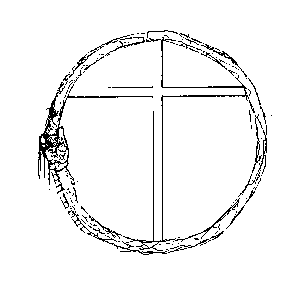
[[File:Opus dei.gif|none]] | |||
Opus Dei, meaning '''"Work of God"''' in Latin, is a personal prelature within the Catholic Church. It is known for its emphasis on finding God in everyday life, particularly through one's professional work and family. The group has been controversial due to its perceived secrecy, strict internal practices, and alleged ties to right-wing politics. | Opus Dei, meaning '''"Work of God"''' in Latin, is a personal prelature within the Catholic Church. It is known for its emphasis on finding God in everyday life, particularly through one's professional work and family. The group has been controversial due to its perceived secrecy, strict internal practices, and alleged ties to right-wing politics. | ||
Revision as of 23:13, 2 August 2025

Opus Dei, meaning "Work of God" in Latin, is a personal prelature within the Catholic Church. It is known for its emphasis on finding God in everyday life, particularly through one's professional work and family. The group has been controversial due to its perceived secrecy, strict internal practices, and alleged ties to right-wing politics.
What is Opus Dei?
Personal Prelature:
Opus Dei is a unique structure within the Catholic Church, a personal prelature, meaning it's overseen by its own prelate (bishop) who reports directly to the Pope.
Finding God in Ordinary Life:
Opus Dei's core teaching is that all people are called to holiness, and this can be achieved through the ordinary activities of daily life, like work and family.
Emphasis on Chastity:
Many members, especially "numeraries" and "associates," take vows of lifelong chastity.
Structure:
Opus Dei has both lay members (ordinary members who work and live in the world) and consecrated members (priests and numeraries who live in community).
Why is it Controversial?
Secrecy:
Opus Dei has been criticized for its secrecy, which can make it difficult to understand the group's inner workings and practices.
Strict Practices:
Some practices, like the reading of members' mail and the requirement to hand over salaries, have drawn criticism for being overly controlling.
Deceptive Recruitment:
Critics allege that Opus Dei uses deceptive recruitment tactics, including "love bombing" (intense praise) and manipulative social interactions.
Political Ties:
Opus Dei has faced accusations of supporting right-wing political movements and figures, particularly in the past.
Portrayal in Popular Culture:
The group's portrayal in popular works like The Da Vinci Code has fueled negative perceptions and controversy.
Former Member Accounts:
Many former members have spoken out about their experiences, alleging abuses of power, psychological manipulation, and difficulty leaving the organization.
General Catholic Criticism:
As a Catholic organization, Opus Dei is also subject to criticisms leveled against the Catholic Church in general.

