
Black Panthers
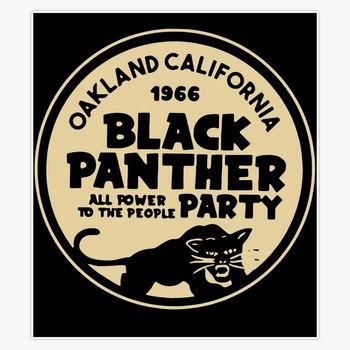
Black Panther Party
[edit | edit source]The Black Panther Party (BPP), originally the Black Panther Party for Self-Defense, was a revolutionary Marxist–Leninist and Black power organization founded in October 1966 in Oakland, California, by college students Huey P. Newton and Bobby Seale. The group initially focused on patrolling African American neighborhoods to protect residents from police brutality, using open carry of firearms as a form of protest and self-defense.
Over time, the party evolved into a nationwide movement with chapters in major U.S. cities and even international branches in the UK and Algeria. It advocated for the arming of African Americans, the release of Black prisoners, exemption from the draft, and reparations for centuries of racial exploitation. The BPP also launched over 30 "survival programs," including free breakfast for children, health clinics, and legal aid, which gained widespread community support.
Despite its community efforts, the FBI under J. Edgar Hoover labeled the BPP the greatest threat to internal security and targeted it through COINTELPRO, using infiltration, misinformation, and violence. Notable members included Fred Hampton, Elaine Brown, Eldridge Cleaver, and Angela Davis. The party declined by the early 1980s and officially dissolved around 1982.
Black Panther Party (BPP) was an American Marxist–Leninist and Black Power political organization founded in October 1966 in Oakland, California by college students Huey P. Newton and Bobby Seale. Originally named the Black Panther Party for Self-Defense, it emerged in response to systemic police brutality and racial injustice in urban Black communities, particularly in the aftermath of the Civil Rights Movement's limited success in Northern and Western U.S. cities.
- Core Ideology: Black nationalism, revolutionary nationalism, Marxism–Leninism, Maoism, anti-imperialism, and intercommunalism.
- Slogan: "All Power to the People."
- Key Activities:
- Patrolled Black neighborhoods with firearms to monitor and challenge police misconduct.
- Launched community survival programs, including free breakfasts for children, free medical clinics, and clothing drives.
- Advocated for decent housing, community control of police and education, exemption from military service, and compensation for historical racial exploitation.
- National Reach: By the late 1960s, the BPP operated official chapters in 13 major U.S. cities, including San Francisco, New York, Chicago, Los Angeles, and Seattle, with international connections in the UK and Algeria.
- Notable Members: Huey P. Newton (co-founder, leader), Bobby Seale (co-founder, chairman), Eldridge Cleaver (Minister of Information), Elaine Brown (first and only female chairman), Fred Hampton (Chicago leader, assassinated in 1969), Angela Davis (associated with the party).
- Government Response: The FBI's COINTELPRO program targeted the BPP as a threat to national security, using surveillance, infiltration, false accusations, and violent raids. This included the 1969 assassination of Fred Hampton and Mark Clark in Chicago.
- Decline: Membership peaked around 1970 at approximately 5,000. Internal conflicts, FBI sabotage, criminal allegations (including extortion and drug trafficking), and legal persecution led to a steady decline. The party officially dissolved in 1982.
- Legacy: The BPP remains a pivotal force in Black liberation history. Its emphasis on armed self-defense, community empowerment, and social justice influenced movements like Black Lives Matter and continues to inspire global struggles for racial and economic justice.

