
Betty Hill (Abductee)
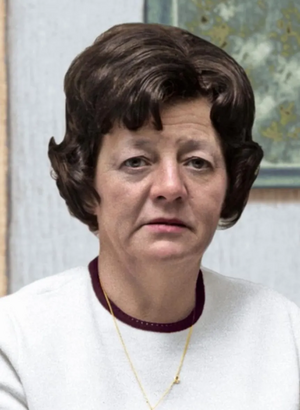
| Name(s): | Eunice Betty Hill |
|---|---|
| Birth Name: | Eunice Betty née Barrett |
| Birth Date: | July 28, 1919 |
| Birth Place: | Newton, New Hampshire |
| Death Date: | October 17, 2004 |
| Death Place: | Kingston, New Hampshire |
| Occupation: | Social worker |
| Spouse: | Barney Hill |
| Case File: | Betty and Barney Hill Case File |
Betty Hill
[edit | edit source]Eunice Elizabeth "Betty" Hill (born June 28, 1919, Newton, New Hampshire — died October 17, 2004, Portsmouth, New Hampshire) was an American social worker, civil rights activist, and UFO researcher who became internationally known as one of the two principal witnesses in the Betty and Barney Hill abduction case of September 19–20, 1961. Betty is widely regarded as the most prominent and influential voice in the modern alien abduction phenomenon, and her account — produced initially through vivid nightmares and subsequently elaborated under hypnotic regression with Dr. Benjamin Simon — established the canonical narrative framework that has shaped thousands of subsequent abduction reports worldwide.
Despite her global notoriety in UFO circles, Betty Hill consistently maintained that her primary identity was as a social worker and community servant. In a 1979 Boston magazine interview she stated: "That's what I want to be remembered for — my social work, not as the woman who sees UFOs." She was, by all accounts, a woman of exceptional intelligence, warmth, and conviction who spent forty years living at the intersection of one of America's most contested and extraordinary claims.
Vital Statistics
[edit | edit source]| Field | Detail |
|---|---|
| Full legal name | Eunice Elizabeth Barrett (birth name); later Eunice Elizabeth Stewart (first marriage); Eunice Elizabeth Hill (second marriage) |
| Known as | Betty Hill |
| Date of birth | June 28, 1919 |
| Place of birth | Newton, New Hampshire, USA |
| Date of death | October 17, 2004 |
| Place of death | Portsmouth, New Hampshire, USA (at home, in her sleep) |
| Cause of death | Lung cancer |
| Burial | Greenwood Cemetery, Kingston, New Hampshire; October 23, 2004 |
| Nationality | American |
| Ethnicity | White; of English descent; claimed Mayflower ancestry |
| Religion | Unitarian |
| Occupation | Social worker; child welfare caseworker |
| Employer | New Hampshire Division of Child Welfare |
| UFO researcher status | Self-described researcher and investigator; regular UFO vigils from mid-1960s onward |
| Niece | Kathleen Marden of Stratham, NH; later herself a UFO researcher and co-author |
Early Life and Education
[edit | edit source]Betty Hill was born Eunice Elizabeth Barrett on June 28, 1919, in Newton, New Hampshire — a small rural town in the Rockingham County area of southern New Hampshire. She was raised on a chicken farm in Kingston, New Hampshire, where her family had deep roots in the New England agricultural tradition.
She was a direct descendant of the Pilgrims who landed in Plymouth, Massachusetts, aboard the Mayflower — a lineage that connected her to the earliest threads of American history and of which she was quietly proud.
She graduated from Sanborn Seminary in 1937 — a preparatory academy in Kingston — and subsequently pursued higher education at the state's flagship institution. She graduated from the University of New Hampshire in 1958 with honors, later participating in graduate studies. She was a member of Alpha Kappa Delta, the sociology honor society.
Her academic career was not a straight line — she attended UNH later in life than was typical, balancing education with work and family responsibilities. Her degree in sociology provided the intellectual foundation for her subsequent career in child welfare.
First Marriage
[edit | edit source]Betty married Robert Stewart of Kittery, Maine, at some point before 1960. The marriage produced two daughters:
- Rose Marie Stewart, who married Nelson Norton and resided in York, Maine; she predeceased her mother. Her children were Tamara L. Norton (1956–2008) and Danny Norton.
- Constance Jean Stewart, who married Paul Zukowski and resided in North Little Rock, Arkansas.
The marriage to Stewart ended in divorce. Betty's daughters from this marriage carried the Stewart name forward, while Betty eventually married Barney Hill in 1960.
Career as a Social Worker
[edit | edit source]Following her graduation from UNH, Betty pursued a career in social services. As a social worker she trained foster parents and worked in the area of adoption, taking special interest in her wards. She was employed by the New Hampshire Division of Child Welfare in Portsmouth, where her work focused on protecting vulnerable children and supporting families navigating the state's social services system.
Child welfare social work in the early 1960s was demanding, emotionally complex, and often under-resourced. Betty's colleagues and supervisors described her as dedicated, compassionate, and unusually perceptive in her understanding of family dynamics and human psychology — qualities that would later inform her articulate and emotionally intelligent recounting of her 1961 experience.
She continued in social work throughout her career, even as her public profile as a UFO witness made her an internationally recognized figure. The professional discipline she brought to her casework appears to have been mirrored in the methodical way she approached her subsequent UFO research.
Civil Rights Activism
[edit | edit source]Betty Hill was a committed civil rights activist throughout her adult life. She was an activist throughout her life for human rights and was a member of the NAACP and a founding member of the Rockingham County Community Action.
Her commitment to civil rights was both personal and professional. On a personal level, her 1960 marriage to Barney Hill — a Black man — was an interracial union in a period when such marriages were socially stigmatized, legally prohibited in many states, and practically dangerous in parts of the country. In New Hampshire in 1960, the Hills were an unusual couple navigating social pressures that, while less overtly violent than in the Jim Crow South, were nevertheless real and daily.
Both Betty and Barney were members of the NAACP and belonged to a local Unitarian church. Barney sat on a local board of the U.S. Civil Rights Commission.
Her Unitarian faith reinforced her activist orientation — the Unitarian tradition's emphasis on social justice and human dignity aligned naturally with her work in child welfare and her commitment to racial equality. The Portsmouth Unitarian church was a social anchor for the Hills in a community that did not always welcome their union.
Marriage to Barney Hill
[edit | edit source]Betty married Barney Hill on May 14, 1960, in what was by all accounts a deeply loving partnership between two people who shared values, faith, and community commitment. Barney was born in Newport News, Virginia (some sources state Philadelphia) on July 20, 1922, and had served in the U.S. Army during World War II before relocating to New Hampshire and working as a postal carrier. The Hills had no children together.
The Hills kept a dachshund named Delsey — their dog was aboard the car on the night of September 19, 1961, and was notably agitated and disoriented during the missing time period, a detail that has been cited by researchers as one of the case's minor corroborating elements.
Their life together before the 1961 incident was, by all accounts, happy and purposeful — two people engaged in their community, devoted to justice, and building a shared life in southern New Hampshire.
The September 19–20, 1961 Incident
[edit | edit source]On the night of September 19–20, 1961, Betty and Barney Hill were returning from a vacation in Montreal and Niagara Falls when they encountered an anomalous aerial object in the White Mountains of New Hampshire that would change the course of both their lives.
The Sighting
[edit | edit source]At approximately 10:00–10:30 PM, south of Colebrook on U.S. Route 3, Betty noticed a bright light in the sky near the moon. As the Hills drove south through Franconia Notch, the light grew larger and appeared to approach. They stopped to observe with binoculars. What Betty saw through the binoculars was not a point of light but a large, structured craft with rows of windows and humanoid figures visible inside.
Barney walked across a field toward the hovering object, binoculars in hand, before panic seized him and he ran back to the car. Moments later, two sets of beeping or buzzing sounds bracketed an approximately two-hour period during which neither Hill has any conscious memory. They arrived home in Portsmouth at approximately 5:15 AM — roughly two hours later than the journey should have taken, having traveled 35 miles they could not account for.
Physical Anomalies Discovered
[edit | edit source]On the morning of September 20, the Hills discovered a set of physical anomalies that predated any abduction narrative:
- Betty's dress was torn in multiple places and covered in a fine pink powder that was never identified
- Barney's dress shoe toes were severely scuffed, as if he had been dragged
- Both their watches had stopped and never worked again
- The trunk lid of their 1957 Chevrolet Bel Air bore several polished circular patches that caused a compass needle to spin erratically — an electromagnetic anomaly confirmed by NICAP investigator Walter Webb on September 29 and documented before it faded
- Betty noticed two pink circles on her dress near the earring positions; the earrings were missing
Betty's Nightmares
[edit | edit source]Beginning approximately ten days after the incident, Betty experienced five consecutive nights of vivid, detailed, and consistent dreams about the missing period. She described being taken aboard a craft, separated from Barney, subjected to a medical examination including a long needle inserted into her navel for what she was told was a pregnancy test, being shown a large book of unreadable symbols, and being shown a three-dimensional star map by the beings' leader.
Betty wrote these dreams down in careful detail. These written records — produced in late 1961, more than two years before hypnotic regression began — are among the most significant primary documents in the Hill case. They establish the core content of Betty's abduction narrative before any hypnotic suggestion, before any media exposure, and before the modern alien abduction archetype had been disseminated.
Hypnotic Regression: Dr. Benjamin Simon
[edit | edit source]After Barney's health deteriorated significantly following the incident, the Hills were referred to Dr. Benjamin Simon of Boston — a Harvard-affiliated psychiatrist specializing in hypnotherapy and wartime trauma. From January through June 1964, Simon conducted weekly hypnotic regression sessions with Betty and Barney separately, recording every session on audio tape.
Under hypnosis, Betty's account expanded considerably from the dream narrative. She described the medical examination in detail, her extended conversation with the beings' leader (who spoke to her in English and appeared curious about human biology and customs), her attempt to take the book of symbols as evidence (refused by the beings), and the star map episode.
In one of the most famous moments of the sessions, Betty — while hypnotized — was asked to draw the star map from memory. The resulting sketch, produced in 1964, would later become the subject of intensive astronomical analysis by Marjorie Fish, who identified it as a possible representation of the view from the Zeta Reticuli binary star system. The timing argument — that the double-star nature of Zeta Reticuli was not published in the Gliese catalogue until 1969, five years after Betty's drawing — has been cited as a potential indicator that the drawing reflected genuine information rather than cultural contamination.
Dr. Simon concluded that Betty's vivid dreams had generated the abduction narrative that she and Barney subsequently elaborated under hypnosis, rather than that hypnosis had recovered suppressed genuine memory. Betty disagreed with this interpretation for the rest of her life, maintaining that the experience was real.
Reporting the Incident
[edit | edit source]Two days after the incident, on September 21, 1961, Betty wrote a letter to NICAP (National Investigations Committee on Aerial Phenomena), describing the sighting. On the same day, Barney called Pease Air Force Base in Portsmouth. Major Paul Henderson of the 100th Bomb Wing interviewed Barney and filed an Air Intelligence Report classifying the sighting as "unidentified" — an official government document corroborating the Hills' account that entered the Project Blue Book database.
NICAP investigator Walter Webb — a professional astronomer at the Hayden Planetarium in Boston — visited the Hills on September 29 for a six-hour interview. Webb examined the compass-deflecting patches on the car, documented the physical anomalies, interviewed both Hills separately, and filed a report concluding they were credible witnesses of a genuine anomalous encounter.
Post-Incident Life and UFO Research
[edit | edit source]The 1961 incident transformed Betty Hill's life. In the years and decades that followed, she became one of the most recognized voices in UFO research — not by choice initially, but because the story found its way into public consciousness.
The 1965 Media Exposure
[edit | edit source]In August 1965, Boston Traveler reporter John Luttrell published a story about the Hills' experience without their consent. The story was picked up by the Associated Press wire and spread nationally. The Hills were suddenly famous in a way neither had sought. This unwanted public exposure was the catalyst for their decision to cooperate with journalist John G. Fuller on a book that would at least allow them to control their own narrative.
The Interrupted Journey (1966)
[edit | edit source]Working with journalist John G. Fuller, the Hills cooperated on The Interrupted Journey (Dial Press, 1966) — a full account of the sighting, the missing time, and the hypnotic regression sessions, drawing extensively on Dr. Simon's recorded tapes. The book became a bestseller and brought the Hill story to a mass American audience. It remains the standard account of the case.
Regular UFO Vigils
[edit | edit source]Betty conducted regular UFO vigils, reportedly at least three times a week as late as 1977, as part of her ongoing interest in observing and documenting potential UFO activity. She would drive to locations in the New Hampshire countryside at night, watch the sky, and photograph anything she found interesting. This disciplined field observation became a major part of her post-1961 life, and she accumulated a large personal archive of photographs and notes.
Public Speaking
[edit | edit source]Betty delivered public lectures and presentations on the abduction experience, including a notable appearance in 1980 at the National UFO Conference in New York City, where she displayed more than 200 slides of alleged UFO photographs. She spoke at UFO conferences, university gatherings, and civic groups across the country for decades, giving hundreds of public presentations.
Her speaking style was described by those who heard her as direct, credible, and grounded — she did not trade in sensationalism and was notably dismissive of the more far-fetched elements of UFO culture. She stuck to what she had personally observed and experienced.
Television and Documentary Appearances
[edit | edit source]Betty appeared in numerous television and documentary productions over the decades:
- Nova (PBS, 1974)
- UFOs Are Here! (1977)
- In Advance of the Landing (1993, documentary)
- Where Are All the UFOs? (1996, television documentary)
- A segment on WGBH Greater Boston in the late 1990s, during which she reflected at age 78 on the incident and its broader implications
After her death in 2004, archive footage and recordings of Betty's interviews and statements continued to appear in various UFO-related documentaries and specials.
The Star Map and Astronomical Debate
[edit | edit source]Betty's under-hypnosis star map drawing became the subject of significant scientific attention when amateur astronomer Marjorie Fish matched it to the Zeta Reticuli system and published her analysis in Astronomy magazine in December 1974. This triggered a published scientific debate in Astronomy throughout 1975, involving rebuttals by Carl Sagan and Steven Soter, making the Hill star map the only UFO-related claim ever to generate a substantive peer-reviewed debate in a mainstream astronomy journal.
Betty followed this debate closely and supported Fish's analysis, though she was aware of its contested status. She maintained until her death that the star map she had drawn under hypnosis accurately represented what she had seen aboard the craft.
Later Life in Portsmouth
[edit | edit source]After Barney Hill's death in 1969, Betty Hill remained in Portsmouth, New Hampshire, where she continued to reside until her death in 2004. She maintained the home she had shared with Barney, continued her social work career, and became a somewhat reluctant fixture of the UFO research community — attending conferences, corresponding with researchers worldwide, and remaining the most accessible primary source for the most important abduction case in history.
She prepared an unpublished manuscript titled The Interrupted Journey Continued: A Common Sense Approach to UFOs, which detailed her perspectives on UFO phenomena, including accounts of subsequent sightings she believed she had made during her regular vigils.
Death
[edit | edit source]Betty Hill died in her sleep on the night of October 17, 2004, at her home in Portsmouth, New Hampshire. She was 85 years old. The cause of death was lung cancer. Her burial took place on October 23, 2004, at Greenwood Cemetery in Kingston, New Hampshire — the town where she had grown up on a chicken farm eighty-five years before.
She was survived by her daughter Constance Jean Stewart Zukowski, and by her niece Kathleen Marden of Stratham, New Hampshire — who would later become a UFO researcher in her own right and co-author (with Stanton Friedman) of Captured! The Betty and Barney Hill UFO Experience (2007), written in part as an act of devotion to her aunt's legacy.
The Betty and Barney Hill Archives
[edit | edit source]Most of Betty Hill's notes, tapes, and other items were placed in the permanent collection at the University of New Hampshire, her alma mater. The Betty and Barney Hill Collection at the Milne Special Collections and Archives, Dimond Library, University of New Hampshire, contains:
- Betty's original handwritten dream records from late 1961 (predating hypnosis)
- Audio recordings of all hypnotic regression sessions with Dr. Simon
- Betty's under-hypnosis star map drawing
- Betty's preserved dress with the pink powder
- Decades of correspondence with researchers, journalists, and the general public
- Photographs from Betty's UFO vigils
- Research notes and manuscripts
- Slides from conference presentations
- Newspaper clippings and media materials
- Personal journals and essays
The collection is considered one of the most significant archives in UFO research history — a primary source record for the foundational case of the alien abduction phenomenon, preserved in an accredited academic institution.
Personality and Character
[edit | edit source]Those who knew Betty Hill consistently described her in similar terms. Her niece Kathleen Marden remembered her as "a wonderful, generous, kind, witty, vivacious person." Researchers who interviewed her over the decades noted:
- Intellectual seriousness: She read widely in science and astronomy, followed the Zeta Reticuli debate in the scientific literature, and engaged substantively with criticism of her case
- Emotional groundedness: She was not prone to hysteria or exaggeration; she described her experience in factual, measured language and was notably impatient with sensationalism
- Humor: Multiple accounts describe Betty as genuinely funny — she could find humor in the absurdity of her situation and was known to make jokes at her own expense
- Stubbornness: She did not change her core account to accommodate critics or to make it more palatable to either believers or skeptics; she said what she experienced and did not apologize for it
- Frustration with the UFO community: In her later years Betty became increasingly critical of elements of the UFO research community she found credulous or exploitative; she maintained rigorous standards for what counted as evidence and was willing to say so publicly
Her most quoted personal statement remains the 1979 Boston magazine interview line: "That's what I want to be remembered for — my social work, not as the woman who sees UFOs." In the end, history has not entirely respected this wish — but the woman it describes is worth knowing: a social worker who trained foster parents and fought for children, who marched for civil rights in a state not always ready to receive that march, who happened to encounter something in the New Hampshire mountains that she spent the rest of her life trying to understand.
Legacy
[edit | edit source]Betty Hill's legacy operates on several distinct levels:
Foundational Abduction Witness
[edit | edit source]Betty is the original witness in the most important abduction case in history. The narrative she produced — through dreams, through hypnosis, and through decades of public testimony — established the vocabulary, the imagery, and the emotional register of the alien abduction phenomenon. The beings with large dark eyes, the medical examination, the missing time, the star map, the memory block: all of these elements entered popular consciousness through Betty Hill's account, whatever its ultimate origin.
The Star Map
[edit | edit source]Betty's under-hypnosis star map drawing is one of the most famous and debated artifacts in UFO history. It generated the only peer-reviewed scientific debate in a mainstream astronomy journal ever triggered by a UFO-related claim. Whatever its astronomical validity, it demonstrated that Betty's account contained specific, verifiable elements that demanded serious analytical attention rather than simple dismissal.
The New Hampshire Historical Marker
[edit | edit source]In July 2011, the New Hampshire Division of Historical Resources marked the site of the alleged craft's first approach with a historical marker — placed on Route 3 near Indian Head. The marker is believed to be the first official governmental commemoration of an alien abduction event in American history. It represents New Hampshire's institutional acknowledgment that something worth marking happened on this road on the night of September 19, 1961.
Academic Recognition
[edit | edit source]The 2023 publication of historian Matthew Bowman's The Abduction of Betty and Barney Hill: Alien Encounters, Civil Rights, and the New Age in America (University Press of New England) — the first full academic history of the case — established Betty Hill as a figure of historical significance beyond the UFO literature, someone whose story illuminates the intersection of race, gender, faith, and American culture in the early 1960s.
Inspiration for Subsequent Research
[edit | edit source]Betty's cooperation with researchers and her preservation of her materials inspired the entire infrastructure of serious abduction research that followed. Her willingness to be interviewed, to share her records, and eventually to deposit her archives at UNH created a model for how UFO experiencers could participate constructively in the research process.
Key Relationships
[edit | edit source]| Person | Relationship | Significance |
|---|---|---|
| Barney Hill (1922–1969) | Second husband | Co-witness; shared the 1961 experience; died February 25, 1969, at age 46 of cerebral hemorrhage |
| Dr. Benjamin Simon, MD | Treating psychiatrist; hypnotherapist | Conducted the 7-month hypnotic regression series; concluded dreams generated abduction narrative; published analysis 1967 |
| Walter Webb | NICAP investigator; astronomer | First serious investigator; confirmed physical anomalies; conducted 6-hour interview September 29, 1961; assessed Hills as credible |
| John G. Fuller | Journalist and author | Wrote The Interrupted Journey (1966) with Hills' cooperation; brought case to mass audience |
| Marjorie Fish | Amateur astronomer | Analyzed Betty's star map drawing; identified Zeta Reticuli match; published 1974 |
| Kathleen Marden | Niece | Later UFO researcher; co-authored Captured! (2007) with Stanton Friedman; custodian of Betty's memory |
| Major Paul Henderson | U.S. Air Force, Pease AFB | Filed Air Intelligence Report classifying sighting as "unidentified"; official government corroboration |
| Carl Sagan | Astronomer | Published critical rebuttal to Fish's star map analysis; generally sympathetic to Hills as sincere though skeptical of literal abduction |
| Estelle Parsons | Actress | Portrayed Betty Hill in The UFO Incident (NBC, 1975) |
Filmography and Media Appearances
[edit | edit source]| Year | Production | Type | Betty's Role |
|---|---|---|---|
| 1974 | Nova (PBS) | Television documentary | Interviewee |
| 1975 | The UFO Incident (NBC) | Television film | Subject; portrayed by Estelle Parsons |
| 1977 | UFOs Are Here! | Documentary film | Interviewee / participant |
| 1993 | In Advance of the Landing | Documentary film | Interviewee |
| 1996 | Where Are All the UFOs? | Television documentary | Interviewee; archive audio |
| Late 1990s | WGBH Greater Boston | Television interview segment | On-camera interview, age 78 |
Published and Archival Works
[edit | edit source]- Handwritten dream records (October–November 1961) — Betty and Barney Hill Collection, UNH; unpublished
- Letter to NICAP (September 21, 1961) — Betty and Barney Hill Collection, UNH; the first official report of the incident
- Hypnosis session audio recordings (January–June 1964) — Betty and Barney Hill Collection, UNH; primary source record
- Star map drawing (under hypnosis, 1964) — Betty and Barney Hill Collection, UNH; subject of Marjorie Fish's analysis
- Correspondence archive (1961–2004) — Betty and Barney Hill Collection, UNH; extensive
- Photograph archive (UFO vigils, 1960s–2000s) — Betty and Barney Hill Collection, UNH
- Unpublished manuscript: The Interrupted Journey Continued: A Common Sense Approach to UFOs — Betty and Barney Hill Collection, UNH
Bibliography: Works About Betty Hill
[edit | edit source]- John G. Fuller — The Interrupted Journey (Dial Press, 1966) — Primary narrative account with Hills' cooperation
- Kathleen Marden and Stanton Friedman — Captured! The Betty and Barney Hill UFO Experience (New Page Books, 2007) — Pro-authenticity treatment by Betty's niece
- Matthew Bowman — The Abduction of Betty and Barney Hill: Alien Encounters, Civil Rights, and the New Age in America (University Press of New England, 2023) — Academic historical treatment
- William Ross — "Extraterrestrials in the Stacks: An Archivist's Journey with Alien Abduction, A Stained Blue Dress, and the Betty and Barney Hill Collection," The Journal of Popular Culture, 53(6), 2020
- Terence Dickinson — "The Zeta Reticuli Incident," Astronomy magazine, December 1974 — Contains analysis of Betty's star map drawing
See Also
[edit | edit source]- Betty and Barney Hill Abduction — Master Case File
- Betty and Barney Hill — Barney Hill's Abduction Account Under Hypnosis
- Betty and Barney Hill — The Star Map: Betty's Drawing and Marjorie Fish's Analysis
- Betty and Barney Hill — Dr. Benjamin Simon and the Hypnotic Regressions
- Betty and Barney Hill — Physical Anomalies and Immediate Aftermath
- Betty and Barney Hill — The Missing Time Episode
- Betty and Barney Hill — Cultural Legacy and Impact on Abduction Research

